






Technology no longer evolves in isolated steps. Modern innovation unfolds as interconnected systems where platforms, data and intelligent tools influence one another simultaneously. For businesses, creators and digital professionals, understanding this complexity has become essential for sustainable growth and informed decision making.

Within this landscape, tech trends gfxprojectality provides a structured way to interpret emerging tech trends and long term digital innovation trends. Instead of tracking individual technologies, it emphasizes relationships, adoption patterns and future facing relevance. This approach helps readers move beyond surface level awareness toward actionable technology evolution insights.
By exploring this framework, readers gain clarity on future technology developments, understand digital transformation trends and strengthen innovation strategy insights across multiple industries.
What are Tech Trends Gfxprojectality?
Tech trends gfxprojectality is an analytical framework focused on interpreting emerging tech trends as interconnected digital systems. It evaluates how technologies evolve together, influence adoption patterns and shape long term innovation outcomes.
Unlike traditional trend summaries, this approach prioritizes structure over novelty. Artificial intelligence trends, immersive technology developments and data driven innovation are analyzed based on interaction, scalability and ecosystem relevance.
This perspective allows organizations and professionals to:
- Identify technologies with long term value
- Reduce uncertainty in innovation planning
- Align digital investments with measurable outcomes
Why Emerging Tech Trends Require Contextual Analysis
Emerging tech trends often appear fragmented due to rapid innovation cycles and marketing driven narratives. Without context, decision makers may adopt technologies prematurely or overlook foundational systems that enable long term transformation.
Tech trends gfxprojectality introduces contextual hierarchy into digital innovation trends. It evaluates technologies based on adoption readiness, ecosystem maturity and strategic alignment. This structured approach improves clarity and reduces reactive decision making.
For organizations navigating digital transformation trends, contextual analysis supports resilience and long term competitiveness.
Core Drivers of Digital Innovation Trends
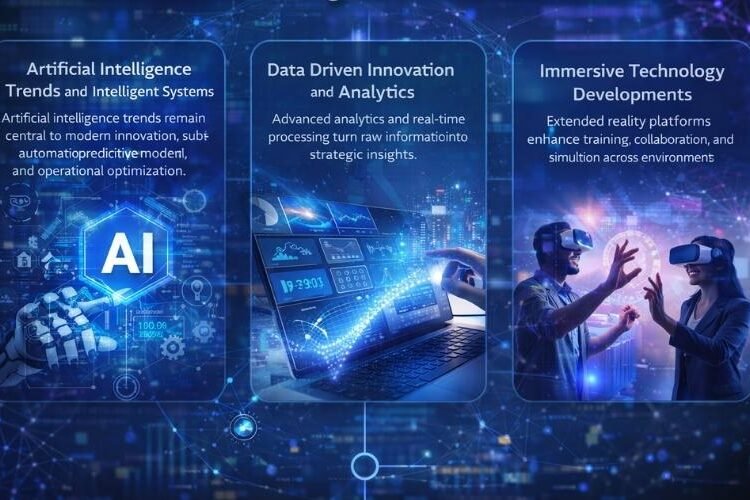
Digital innovation is driven by a combination of technological advancement, data availability and changing user expectations. Key drivers include artificial intelligence trends, data driven innovation systems and immersive technology developments, all of which influence how digital platforms evolve, scale and integrate across industries.
Artificial Intelligence Trends and Intelligent Systems
Artificial intelligence trends remain central to modern innovation. AI supports automation, predictive modeling, personalization and operational optimization across industries.
Within tech trends gfxprojectality, artificial intelligence functions as an enabling layer. Its effectiveness depends on integration with data systems, governance frameworks and ethical design principles. AI is evaluated not as a standalone solution, but as part of a broader digital ecosystem.
Data Driven Innovation and Analytics
Data driven innovation transforms raw information into strategic insight. Advanced analytics, machine learning pipelines and real time processing enable organizations to anticipate outcomes rather than react to them.
This framework assesses data driven innovation based on data quality, integration capability and decision impact. Systems that fail to support actionable insight are deprioritized, regardless of technical sophistication.
Immersive Technology Developments
Immersive technology developments, including extended reality platforms, redefine digital interaction. These systems enhance training, collaboration and simulation across education, healthcare and enterprise environments.
Tech trends gfxprojectality evaluates immersive technologies based on usability, infrastructure requirements and long term adoption viability rather than novelty appeal.
Key Technology Domains Within Tech Trends Gfxprojectality
Before examining specific domains, it is important to understand how different technologies function collectively. The table below outlines the primary technology domains analyzed within tech trends gfxprojectality and their strategic roles.
Core Technology Domains and Strategic Roles
Understanding how emerging technologies function within a broader digital ecosystem requires identifying their primary roles and strategic value. The following table outlines the core technology domains analyzed within tech trends gfxprojectality, highlighting how each domain contributes to digital innovation, operational efficiency and long term strategic planning.
| Technology Domain | Functional Role | Strategic Contribution |
| Artificial Intelligence | Automation and prediction | Improves decision accuracy |
| Data Driven Systems | Insight generation | Enables strategic planning |
| Immersive Technologies | Experience enhancement | Expands digital interaction |
| Automation Platforms | Process optimization | Reduces operational friction |
| Digital Experience Tools | User engagement | Improves adoption and retention |
Together, these technology domains form an interconnected innovation framework rather than isolated solutions. Artificial intelligence, data driven systems, immersive technologies and automation platforms reinforce one another, creating scalable digital environments that support informed decision making, improved adoption and sustainable digital transformation.
Technology Evolution Insights and Adoption Patterns
Technology evolution insights focus on how innovations mature over time. Most technologies progress through experimentation, early adoption, standardization and optimization stages.
Tech trends gfxprojectality identifies these stages early by analyzing research activity, investment behavior and adoption signals. This prevents misaligned expectations and supports realistic innovation timelines.
Understanding adoption patterns improves alignment between innovation initiatives and long term organizational goals.
Applications Across Industries
Digital innovation impacts industries in different ways depending on operational needs, regulatory environments and adoption readiness. Tech trends gfxprojectality helps interpret how emerging tech trends are applied across sectors by examining technology adoption patterns, strategic objectives and long term digital transformation trends. The following sections outline how this framework influences decision making and innovation across key industries.
Business and Enterprise Strategy
Businesses rely on digital innovation trends to enhance efficiency, scalability and customer engagement. Automation platforms, analytics systems and cloud infrastructure form the foundation of modern enterprises.
Tech trends gfxprojectality helps organizations prioritize technologies that align with strategic objectives rather than short term experimentation.
Education and Knowledge Systems
Education platforms increasingly adopt immersive technology developments and data driven personalization. Structured trend analysis helps institutions select technologies that support long term learning outcomes.
Creative and Media Industries
Creative workflows benefit from automation and intelligent tools that streamline production and distribution. Tech trends gfxprojectality ensures alignment with evolving digital ecosystems and sustainable content strategies.
Benefits and Challenges of Structured Tech Trend Analysis
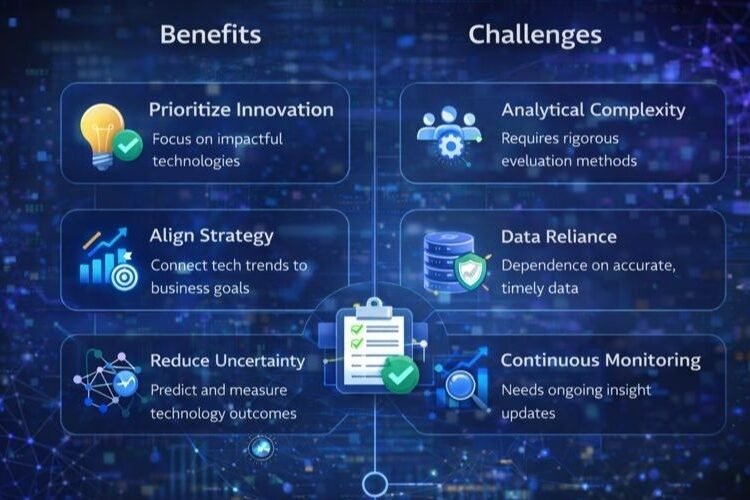
A structured tech trend analysis helps organizations prioritize innovation, reduce uncertainty and align technology decisions with long term strategic objectives. This approach improves clarity by connecting emerging technologies to measurable business and operational outcomes.
However, structured analysis introduces analytical complexity that requires disciplined evaluation methods. Reliable data sources, cross domain expertise and continuous monitoring are necessary to ensure insights remain accurate, relevant and effective for informed decision making.
Benefits and Challenges of Tech Trends Gfxprojectality
Evaluating tech trends gfxprojectality requires understanding both its advantages and its limitations. While a structured approach to emerging tech trends improves clarity and strategic focus, it also introduces certain analytical and operational challenges. The table below summarizes the key benefits and challenges associated with applying this framework in real world technology strategy and decision making.
| Aspect | Benefit | Challenge |
| Trend Prioritization | Clear innovation focus | Requires ongoing research |
| Strategic Alignment | Improved planning accuracy | Cross domain expertise needed |
| Risk Reduction | Lower adoption uncertainty | Data dependency |
| Forecasting Accuracy | Better future readiness | Complexity of variables |
These benefits and challenges highlight the importance of balanced implementation. When applied with reliable data, cross domain expertise and continuous monitoring, tech trends gfxprojectality strengthens innovation strategy insights and forecasting accuracy.
Technology Trend Forecasting and Strategic Value
Technology trend forecasting enables organizations to anticipate disruption and prepare proactively. Effective forecasting combines historical data, adoption metrics and ecosystem analysis.
Within technology trend gfxprojectality, forecasting relies on pattern recognition rather than speculation. This strengthens future technology developments planning and supports long term digital transformation trends.
By identifying which emerging tech trends are likely to mature organizations can plan infrastructure, skills and investment priorities more effectively, ensuring readiness for scalable adoption rather than reactive implementation.
Why Tech Trends Gfxprojectality Matters for Decision Makers
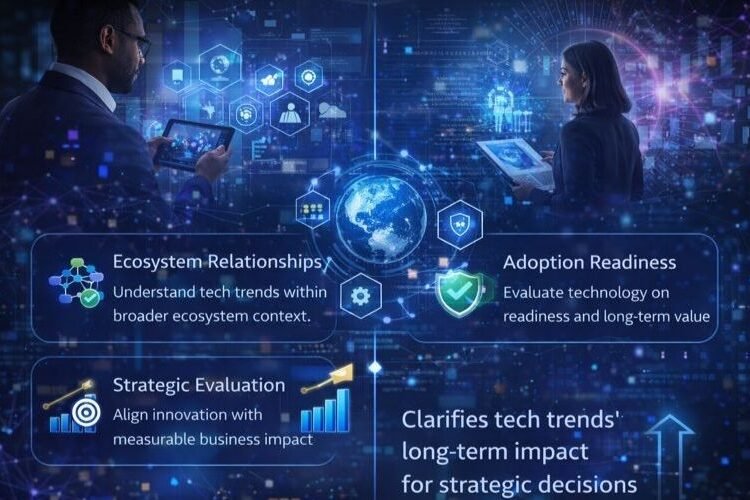
Decision makers face increasing pressure to adopt innovation responsibly while managing risk, budget constraints and long term organizational goals. Fragmented awareness of emerging tech trends often results in reactive adoption, misaligned investments and technology stacks that fail to deliver measurable value.
Tech trends gfxprojectality provides a unified analytical perspective that connects digital innovation trends with strategic intent. By focusing on technology evolution insights, ecosystem relationships and adoption readiness, it enables leaders to evaluate innovation based on long term impact rather than short term visibility.
For executives and strategy leaders, this framework supports innovation strategy insights by aligning future technology developments with business outcomes, governance requirements and operational scalability.
As digital transformation trends continue to accelerate, tech trends gfxprojectality become especially valuable for leaders navigating complex, interconnected digital environments where clarity and foresight directly influence competitive advantage.
Conclusion
Emerging technologies continue to reshape industries through interconnected systems rather than isolated breakthroughs. Understanding these relationships is essential for sustainable innovation.
Tech trends gfxprojectality offers a structured approach to analyzing emerging tech trends, digital innovation trends and future technology developments. By focusing on ecosystem interaction and long term relevance, it enables informed decision making and strategic resilience.
For professionals seeking clarity in technological change, this framework delivers lasting value.
Frequently Asked Questions (FAQs)
What are tech trends gfxprojectality?
Tech trends gfxprojectality is a framework for analyzing emerging tech trends as interconnected digital systems, focusing on long term relevance, adoption patterns and technology evolution insights rather than isolated innovations.
How does tech trends gfxprojectality support digital transformation?
Tech trends gfxprojectality supports digital transformation trends by helping organizations align digital innovation trends with strategic objectives. It reduces uncertainty by evaluating adoption readiness, ecosystem compatibility and long term value, enabling more confident technology decisions and sustainable transformation planning.
Does tech trends gfxprojectality include artificial intelligence trends?
Yes, artificial intelligence trends are a core component of tech trends gfxprojectality. Artificial intelligence is analyzed as an enabling system that supports automation, data driven innovation, predictive decision making and scalable digital ecosystems across multiple industries.
Why is structured tech trend analysis important?
Structured tech trend analysis improves clarity by organizing emerging technologies within a contextual framework. It reduces innovation risk, prevents reactive adoption and enables better technology investment decisions by focusing on interaction, maturity and long term strategic impact.
How does technology trend forecasting work in this framework?
Technology trend forecasting within this framework relies on adoption signals, historical data, research momentum and ecosystem patterns. This approach enables organizations to anticipate future technology developments responsibly while avoiding speculation and short term hype driven predictions.
Who should use tech trends gfxprojectality insights?
Tech trends gfxprojectality insights are valuable for executives, technology strategists, digital transformation leaders, educators and innovation teams. These stakeholders benefit from clearer technology evolution insights that support planning, investment prioritization and long term digital strategy alignment.
Who benefits most from tech trends gfxprojectality?
Business leaders, strategists, educators and digital professionals benefit most from tech trends gfxprojectality by gaining clearer technology evolution insights, improved innovation strategy alignment and a structured understanding of emerging tech trends that supports long term planning and informed decision making.

I am Ali Ahmad, a Business Analyst and research based article writer with a Master’s degree in Business and Finance and over five years of professional experience. My work focuses on data driven analysis, market research and international business relations, with strong attention to global economic trends and financial systems. I specialise in analytical content that evaluates corporate strategies, cross border trade, market behaviour and financial decision making, delivering well structured, factual and insight driven articles.