






Managing finances effectively is essential in today’s dynamic economic environment. Whether you are an individual planning for your future or a business seeking sustainable growth, having access to reliable financial guidance can make a significant difference. Sound financial decisions help mitigate risks, optimize resources and ensure long term stability in a constantly changing market.

In this context, understanding financial guidance ontpeconomy is critical. This guidance helps individuals and organizations navigate economic fluctuations, plan for unexpected challenges and make informed choices that align with their goals. By analyzing trends, assessing risk and leveraging practical strategies, you can gain better control over your financial situation and secure your future.
How Financial Guidance Supports Decision Making
One of the key benefits of financial guidance is that it provides clarity. By analyzing income, expenditures and market conditions, you can identify areas of improvement and allocate resources effectively. For businesses, guidance helps streamline operations, enhance profitability and plan strategic initiatives. Financial literacy gained through guidance also equips individuals with the knowledge to make smarter choices, avoiding common mistakes that can hinder growth.
Understanding the Role of Financial Guidance
Financial guidance helps individuals interpret market changes and understand how their decisions may impact their future. It includes learning about banking systems, investment options, saving strategies and general money management. The purpose is not to make someone a financial professional but to give them enough awareness to make smart choices.
Financial Guidance in the Context of Everyday Decisions
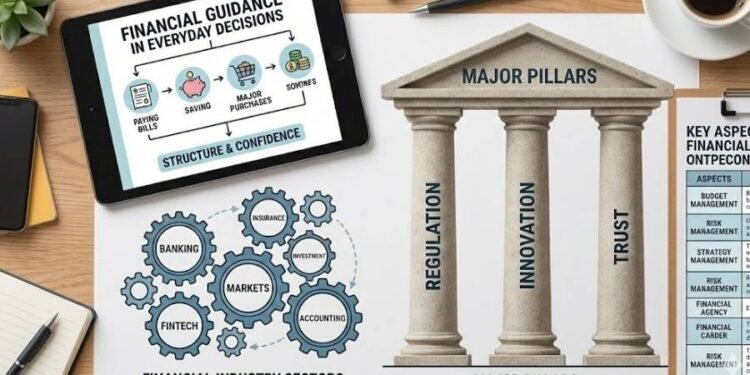
Financial choices are made daily whether someone is paying bills, saving for a goal or planning major purchases. This is where proper guidance becomes helpful. It brings structure to routine actions and ensures individuals do not overextend themselves or fall into financial stress.
Readers who understand these foundational concepts become better at evaluating options and comparing different financial products or services. This improves their confidence and decision making ability.
Types of the Financial Industry
The financial industry plays a vital role in the global economy, offering a range of services that help individuals, businesses and governments manage and grow their finances. It includes various sectors that work together to create a dynamic and complex system that supports financial stability, growth and innovation.
Banking Sector
This includes commercial banks, Islamic banks, retail banks and investment banks. They provide services like savings accounts, loans, credit facilities and financial support to individuals and businesses.
Insurance Sector
Insurance companies help people and organizations manage risks. They offer life insurance, health insurance, property insurance and business coverage to protect against unexpected losses.
Investment and Asset Management Sector
These institutions handle wealth growth and investment planning. They manage portfolios, mutual funds, pension funds and offer guidance for long term financial goals.
Financial Markets and Exchanges
This part of the industry includes stock markets, bond markets, commodity exchanges and forex platforms. They allow buying and selling of financial assets that help in raising capital and managing financial risks.
Fintech Sector
Financial technology companies bring innovation by offering digital payments, mobile banking, online investments and automated financial services. They make financial processes faster and more accessible.
Accounting and Auditing Sector
This sector focuses on financial reporting, compliance, taxation and auditing services. It ensures transparency and accuracy in business operations.
Major Pillars of the Financial Industry
The financial industry stands on important pillars that ensure stability and growth. Regulation is one major pillar because it helps protect consumers and keeps institutions accountable. Another pillar is innovation as technology continues to change how financial services reach customers. Trust also forms a core pillar and remains essential for individuals who rely on institutions to
Key Aspects of Financial Guidance OntpEconomy
| Aspects | Description | Impact |
| Budget Management | Planning and tracking income and expenses | Ensures resources are used efficiently and reduces overspending |
| Investment Planning | Identifying opportunities and assessing risk | Promotes long term financial growth and security |
| Market Awareness | Understanding economic trends and policies | Helps anticipate changes and make informed decisions |
| Risk Management | Preparing for unexpected financial challenges | Minimizes losses and enhances stability |
| Continuous Learning | Staying updated with financial knowledge | Supports informed decision making and adaptability |
How to Use Financial Guidance Effectively
To maximize the benefits, integrate financial guidance into everyday practices. Begin by assessing your current financial position, defining objectives and reviewing progress regularly. Consulting financial experts or advisors can provide personalized advice tailored to your unique circumstances. Monitoring market trends, evaluating risk tolerance and adjusting strategies in response to changes in ontpeconomy are crucial steps for long term success.
Conclusion
Understanding financial guidance ontpeconomy is essential for anyone aiming to achieve financial stability and growth. By leveraging structured advice, analyzing economic trends and applying practical strategies, individuals and businesses can make informed decisions that optimize resources and secure their future. Staying proactive, avoiding common mistakes and continuously adapting to changes are key to maintaining a strong financial foundation.
FAQs
What is financial guidance?
Financial guidance refers to structured support that helps individuals and businesses manage money effectively, understand financial systems, plan budgets, evaluate risks and make informed decisions that align with short term needs and long term financial goals.
Do I need financial experience to understand OntpEconomy?
No prior financial experience is required to understand OntpEconomy. The platform is designed to be beginner friendly, offering simplified explanations of financial concepts, market trends and money management strategies suitable for individuals at all knowledge levels.
Does OntpEconomy include personalized investment advice?
OntpEconomy provides general financial education and investment awareness but does not offer personalized financial or investment advice. Users are encouraged to consult certified financial professionals for customized recommendations tailored to their specific financial circumstances.
Is financial guidance ontpeconomy useful for long term goals?
Yes, financial guidance ontpeconomy supports long term financial planning by helping users create structured savings plans, understand investment options, manage risks and make informed decisions related to education funding, property ownership and retirement preparation.
How does financial guidance improve decision making?
Financial guidance improves decision making by analyzing income, expenses, risks and market conditions. It provides clarity, reduces uncertainty and helps individuals and businesses allocate resources efficiently while avoiding common financial mistakes.
What role does risk management play in financial guidance?
Risk management is a core element of financial guidance. It helps individuals and businesses prepare for unexpected financial challenges by identifying potential risks, creating emergency funds and selecting protective tools such as insurance and diversified investments.
How does financial guidance support small businesses?
Financial guidance helps small businesses manage cash flow, control operational costs, plan investments and evaluate growth opportunities. It also assists in budgeting, tax planning and strategic decision making to ensure long-term sustainability and profitability.
Why is continuous financial learning important?
Continuous financial learning helps individuals stay updated with economic changes, evolving regulations and new financial tools. Ongoing education improves adaptability, strengthens financial confidence and supports smarter decisions in a constantly shifting economic environment.
How does the financial industry contribute to economic stability?
The financial industry contributes to economic stability by facilitating capital flow, offering credit access, managing risks and supporting investment activities. Proper regulation and transparency ensure trust, protect consumers and maintain overall market balance.
How can someone start applying financial guidance in daily life?
Individuals can apply financial guidance by tracking expenses, creating a realistic budget, setting measurable financial goals and reviewing progress regularly. Seeking professional advice and staying informed about economic trends further strengthens financial stability.
Read Also: For more information

I am Ali Ahmad, a Business Analyst and research based article writer with a Master’s degree in Business and Finance and over five years of professional experience. My work focuses on data driven analysis, market research and international business relations, with strong attention to global economic trends and financial systems. I specialise in analytical content that evaluates corporate strategies, cross border trade, market behaviour and financial decision making, delivering well structured, factual and insight driven articles.